Tracey Emin, A Second Life: Reflections from Tate Modern
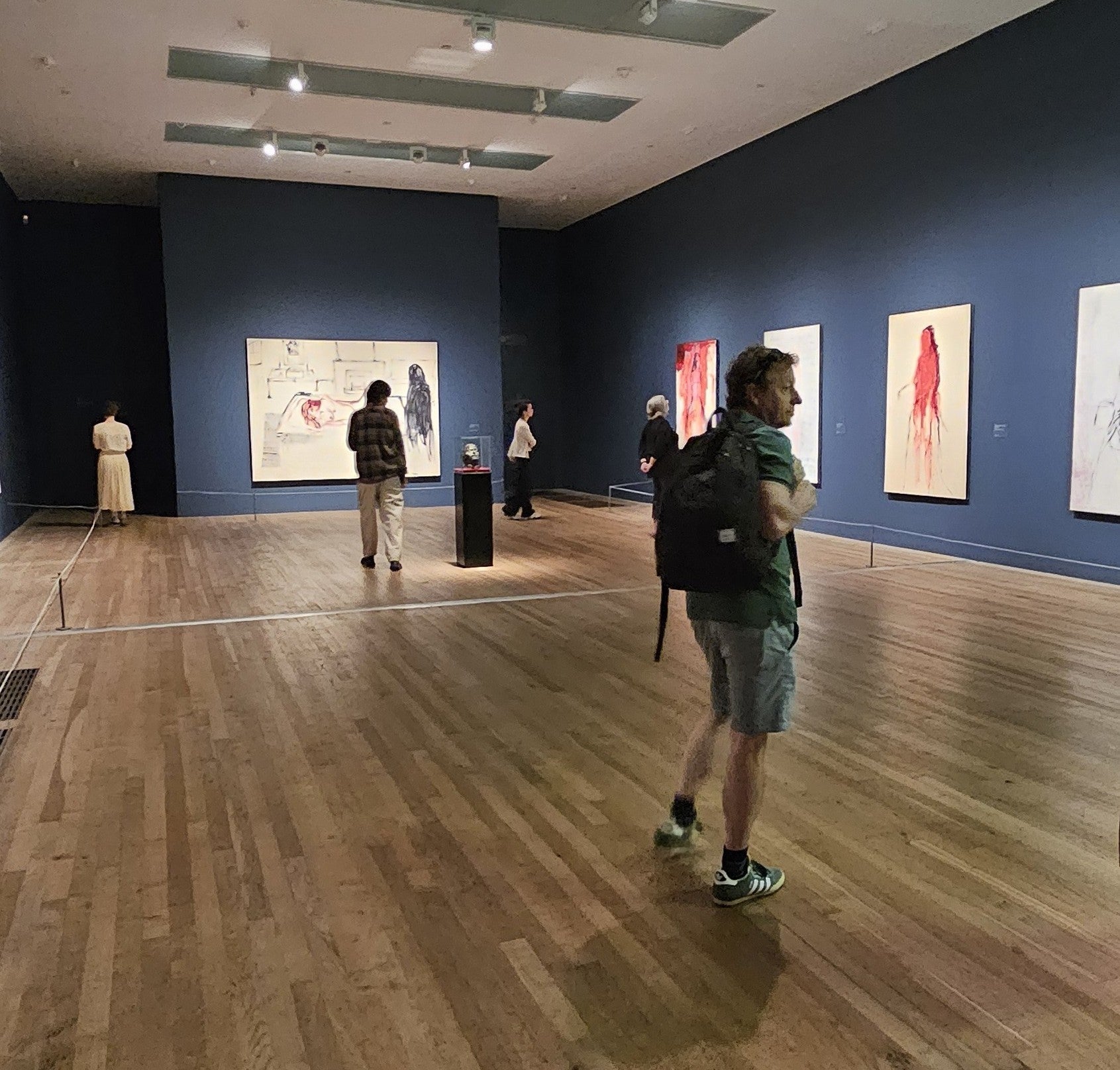
During a recent visit to London, I had the opportunity to visit Tracey Emin: A Second Life at Tate Modern.
As always, visiting Tate Modern is an experience in itself. The vast Turbine Hall alone is worth the journey, regardless of what exhibitions are showing. Our trip to London was primarily to visit family and enjoy an evening at the Royal Albert Hall listening to Alfie Boe in concert, but whenever I find myself in the capital, I struggle to resist spending time immersed in fine art.
Choosing which exhibition to visit was not straightforward. After narrowing down the options, it came down to a choice between Tracey Emin and Anish Kapoor. In the end, I chose Emin. This was her largest exhibition to date, and it felt like an important moment in the career of one of Britain's most recognised contemporary artists.
I will be honest.
I have never felt particularly drawn to Tracey Emin's work. Technically, I had often viewed her drawing ability as limited and her paintings as crude. Then there was the famous bed, which I had seen years ago when it was exhibited in connection with the Turner Prize. I was never as shocked by the bed or the embroidered tent listing those she had slept with as some people were. If anything, it was seeing life drawings attached to gallery walls with sellotape that troubled me most.
Despite this, I have always found Emin herself interesting. Her way of seeing and expressing the world is very different from my own, yet whenever I have heard her speak in interviews or debates, she has come across as articulate, intelligent and deeply knowledgeable.
So A Second Life was an exhibition I approached with curiosity rather than admiration. I genuinely wasn't sure whether I would leave with any greater appreciation of her work.
When Ian and I walked out of the exhibition, however, we were both unusually quiet.
Silenced, perhaps.
A little numb, if I am honest.
I left with a much deeper understanding of the artist and her work.
What became clear is that Tracey Emin is inseparable from her art. Her life experiences, vulnerabilities, relationships, pain and resilience are all embedded within it. The paintings are often harsh, raw and confrontational. Blood-red themes recur throughout the exhibition, accompanied by handwritten words and phrases that seem to demand attention. They do not whisper. They shout.
One of the first works visitors encounter is My Major Retrospective II (1982–1992), comprising 180 photographs mounted onto stitched fabric, documenting paintings created during Emin's years at art school. The exhibition text explains that following her abortion in 1990 - an event she later described as her "emotional suicide" - she destroyed the original works.
One quotation in particular remained with me:
"After my first abortion, I learned more about the essence and knowledge of where things come from than any art college or lecture or anyone could tell me. I also knew intuitively as soon as I'd come round from my abortion that all the art I'd ever made was a real big bunch of crap and had to be destroyed immediately. I promised myself I wouldn't start making art or making things again until I could justify it, parallel, alongside my life, which I do now."
I won't attempt to describe every artwork in the exhibition, but there was one piece that fundamentally altered how I viewed everything that followed.
It was a film in which Emin spoke openly about her abortion.
Visitors were warned that some might find the content difficult and were invited to sit whilst watching. It was, at times, a gut-wrenching account. The film showed her angry, vulnerable, factual, resilient and brutally honest. She spoke about wanting the baby, about failures in her medical care and about the circumstances that led her through such a painful experience.
After watching it, the artwork looked different.
What I had previously dismissed as crude became direct.
What I had viewed as harsh became honest.
The paintings, drawings and words no longer felt like isolated works on a gallery wall. They became evidence of lived experience.
To understand Tracey Emin's work, I believe it is necessary to hear her, listen to her and experience the work alongside her story. There will be people who love the paintings visually without knowing much about her. Equally, there will be those who dislike them. For me, however, true appreciation came through understanding the person behind the work.
The full picture.
As a fine artist, I have not been formally taught in a highly technical sense. Instead, I have been fortunate enough to develop my own visual language through experience, experimentation and an ongoing curiosity about art and artists.
Part of that learning has always been looking at the work of others with an open mind. Visiting exhibitions, studying paintings, sculpture and installation, and allowing myself to respond honestly to what I see. Some artists resonate immediately, whilst others take time to reveal themselves.
Over the years, I think my appreciation and understanding of art has become both broader and more focused. Broader because I have learned to value many different approaches to making art. More focused because I increasingly find myself searching for the person behind the work.
I look for the story.
I look for the reasons why the work needed to be made.
Technical accomplishment can be impressive, but it is not always what stays with me. What I am often drawn to is a sense of authenticity, a power within the work, a depth of expression and an honesty that allows me to connect with the artist behind it.
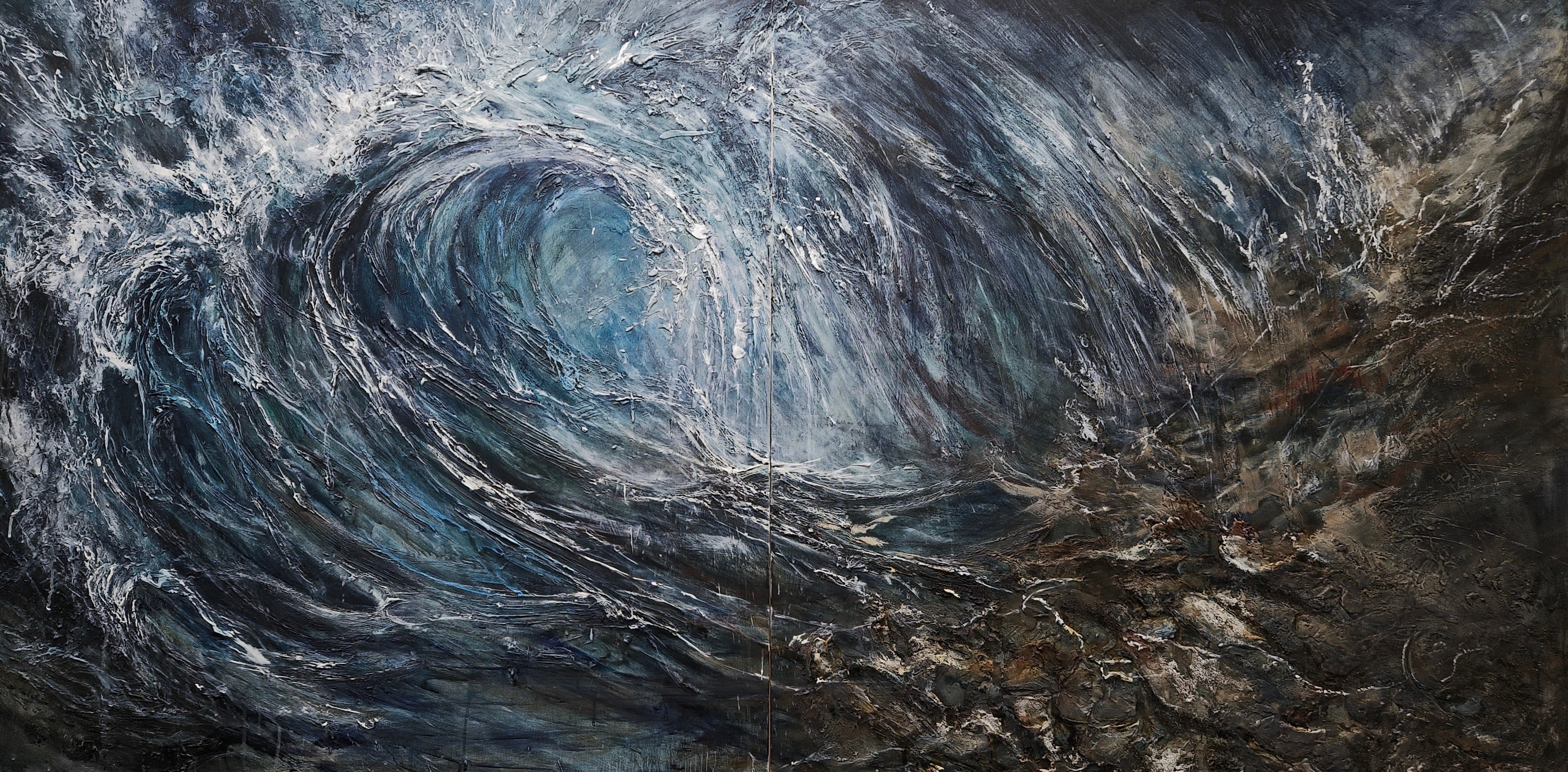
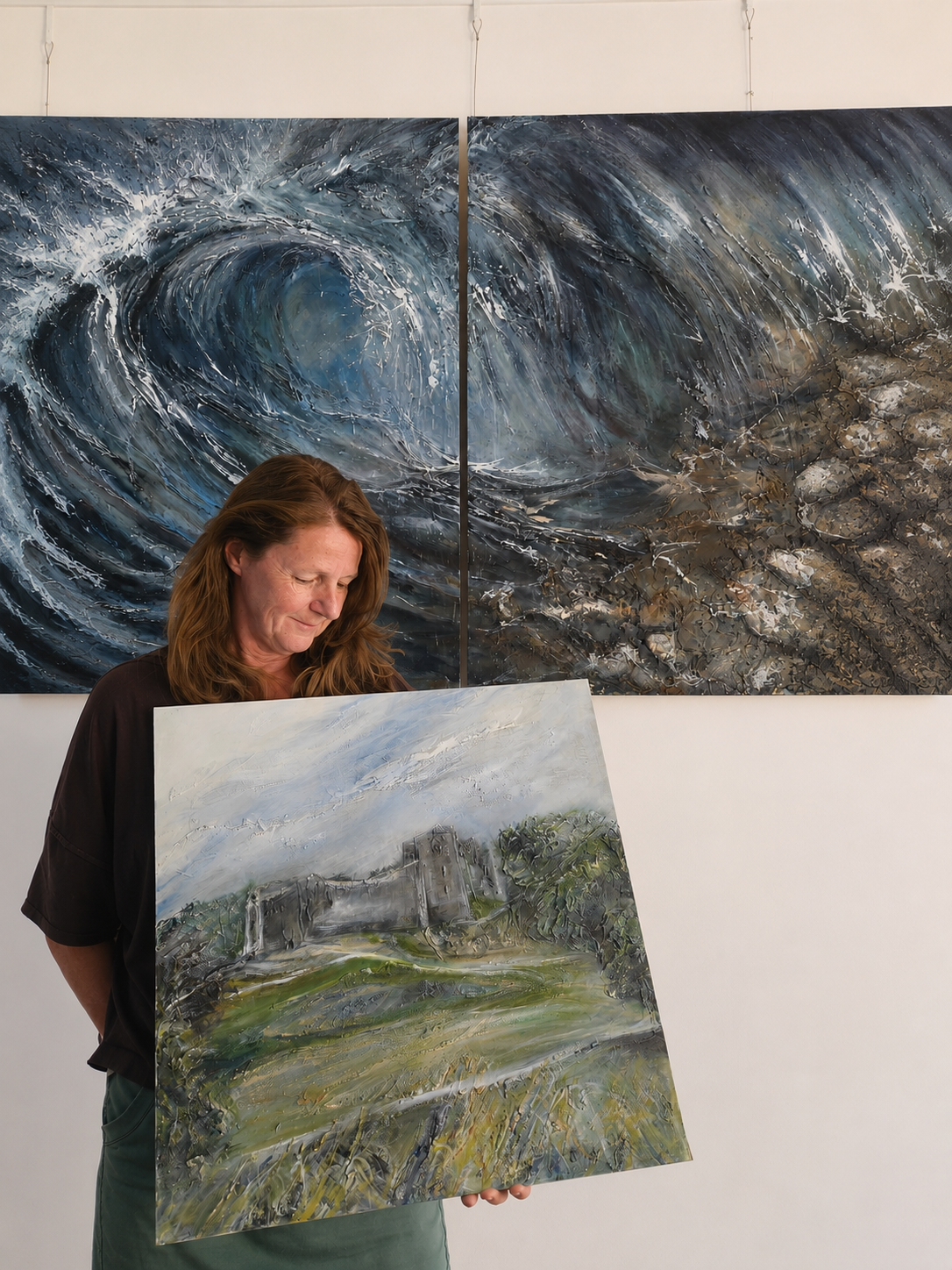
My own paintings emerge from a very different place. They are rooted in the open bays, changing skies and rolling waves of the Gower coastline. Having originally studied sculpture, texture remains fundamental to my process. I often build compositions in relief before applying paint, allowing the work to develop through layers and surface.
The sea has always been a place of healing, freedom and perspective for me. Increasingly, I find myself responding to the emotional impact of place rather than my own internal landscape. The rhythm of the tides, the movement of water and the restorative power of the coastline continue to inspire my work.
Perhaps that is why A Second Life stayed with me long after we left.
It wasn't that I suddenly wanted to paint like Tracey Emin, nor that I connected with every piece in the exhibition. Rather, I came away with a greater appreciation of the importance of communication in art.
Art can be technically accomplished, beautifully crafted and visually impressive, but if the viewer cannot find a way into it, something is lost.
What struck me most was that once I understood more about the experiences behind the work, the paintings themselves began to speak differently.
The marks, the words, the colour and the rawness all became part of a language.
It reminded me that storytelling matters.
Context matters.
Connection matters.
As artists, we each speak a different visual language. Some speak through personal experience, some through politics, some through abstraction and others through landscape and place. Yet all of us are ultimately trying to communicate something beyond the surface of the work itself.
Perhaps that was my greatest takeaway from the exhibition.
Art becomes richer when we are able to connect with the artist's language, and when the artist is brave enough to communicate something truthful in the first place.
Different voices.
Different languages.
But perhaps the same desire to say something truthful.
Jo Frost