Article: Being Authentic - Finding Your Own Voice as an Artist
Being Authentic - Finding Your Own Voice as an Artist
I love watching Portrait Artist of the Year, and this week's episode got me thinking about authenticity in art and, rather unexpectedly, my own artistic journey.
I was particularly struck by the judges' observations about the individuality of the artists' work. They spoke about immediacy, process, atmosphere and the ability to capture not just how someone looks, but how they feel.
It reinforced something I've always believed, going right back to my teaching days. There isn't just one right way to paint.
Learning to Trust My Own Marks
Watching the wonderfully talented young artist Mackenzy Beard, who lives locally to me and appeared in the previous episode, also took me back to my teenage years.
Back then, I was striving for almost photographic realism. I would carefully smooth my paint, trying to achieve the best possible likeness.
Looking back, I think I was simply trying to be good.
I hadn't yet developed the confidence to trust my own mark-making or recognise its value.
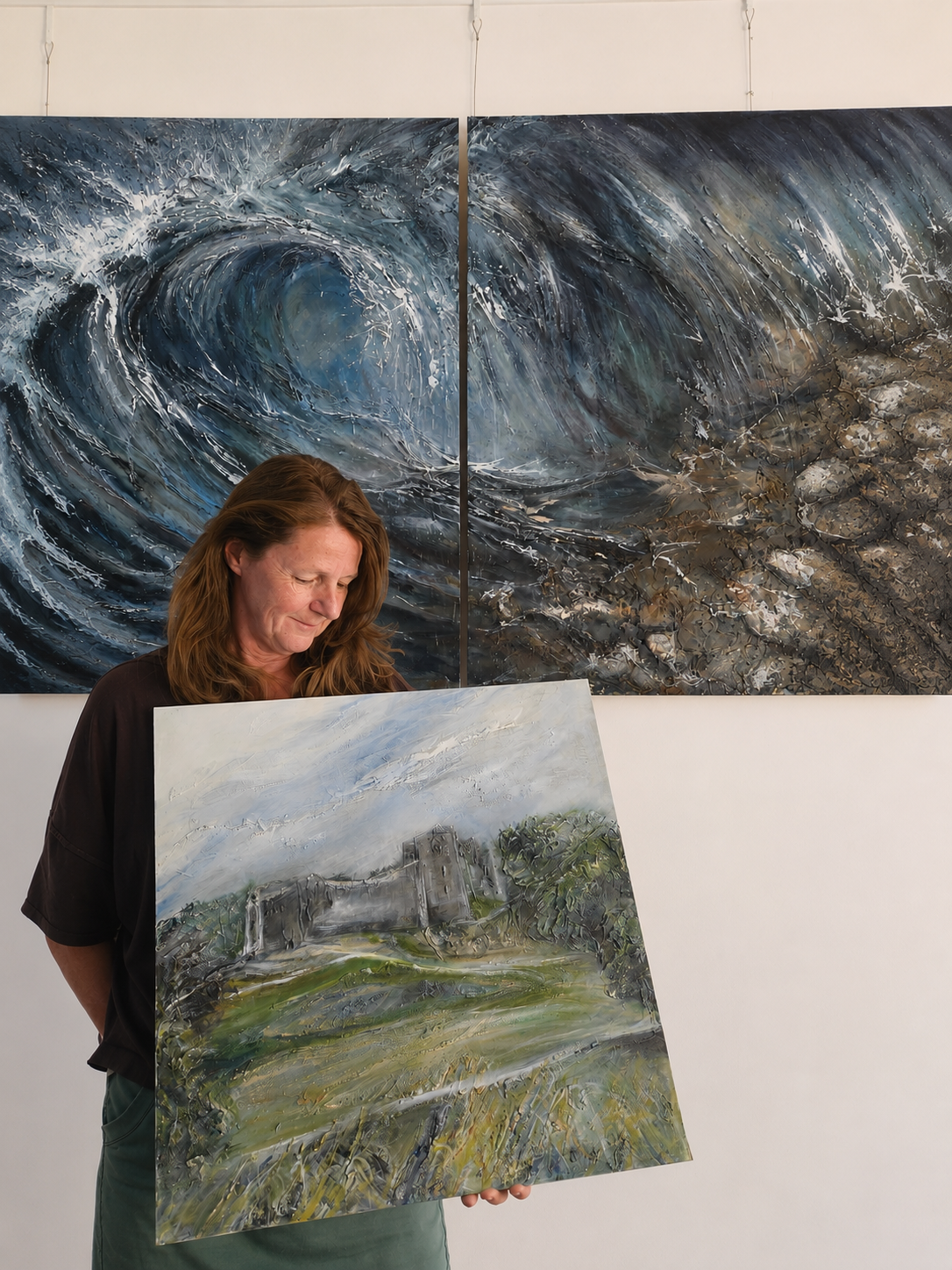
My degree in sculpture was perhaps a turning point. Working with my hands, exploring form, texture and materials, I began to discover a different way of expressing myself. One that has continued to shape my painting practice ever since.
Over the years, I've developed a much deeper understanding of the art I love, and why I love it.
Visiting exhibitions, particularly those featuring internationally acclaimed artists, has been a huge part of that journey. I am, it's probably fair to say, rather addicted to looking at art!
I love studying how artists work, the decisions they make, the materials they use and the emotions their work evokes.
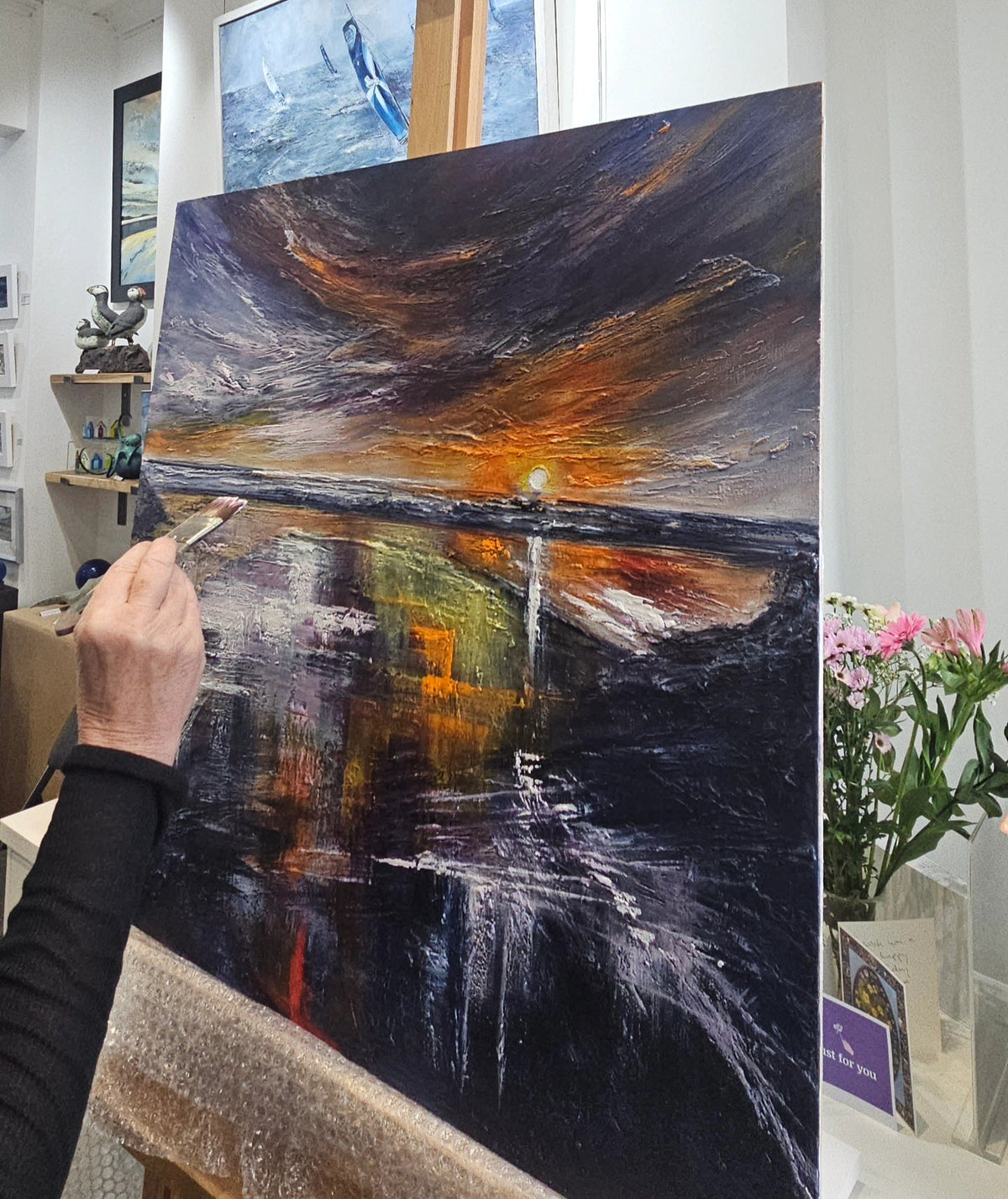
And texture? Well, that's always been one of my greatest passions.
Rediscovering My Earlier Paintings
Interestingly, I recently revisited some paintings of mine in a friend's home, created over twenty years ago.
They were colourful, heavily textured and full of expressive marks.
And I loved them!
It feels a little strange admitting that so openly, but why shouldn't I?
What surprised me was how much I wanted to really look at them. I found myself studying the surfaces, colours and marks, discovering things I perhaps hadn't fully appreciated at the time.
There was something wonderfully reassuring about that experience. A quiet warmth of pride, I suppose. Not because I feel my work is done, far from it! 🤣
But because I could recognise something of myself in those paintings. A way of working that has continued to develop over the years, with its own strength, character and value.
It reminded me that our artistic voice doesn't necessarily arrive fully formed. It grows through experience, experimentation, mistakes and, perhaps most importantly, learning to trust our own instincts.
Finding Your Own Artistic Voice
As artists, we naturally learn from others. We absorb influences, explore techniques and find inspiration in the work around us. I've always believed in sharing knowledge and encouraging others, something that comes naturally after so many years of teaching.
But I also believe there's a difference between learning a technique and discovering your own artistic voice.
We can study how another artist works, explore their materials and learn from their approach. The real challenge, surely, is taking that knowledge somewhere new. Somewhere that reflects our own curiosity, experiences and individuality.
Today, I love that there is room for so many different approaches to painting. Precision, abstraction, texture, simplicity, spontaneity. Each has its place, and each can communicate something extraordinary.
I do sometimes wonder, though, whether every artist reaches that point of truly discovering their own voice.
Some artists seem to find their freedom remarkably early. Others take years, even decades, to develop the confidence to trust their instincts. And some are perfectly happy continuing to explore the approaches of others.
There's no single timetable, and certainly no finishing line.
I sometimes feel that a lifetime simply isn't long